.jpg)
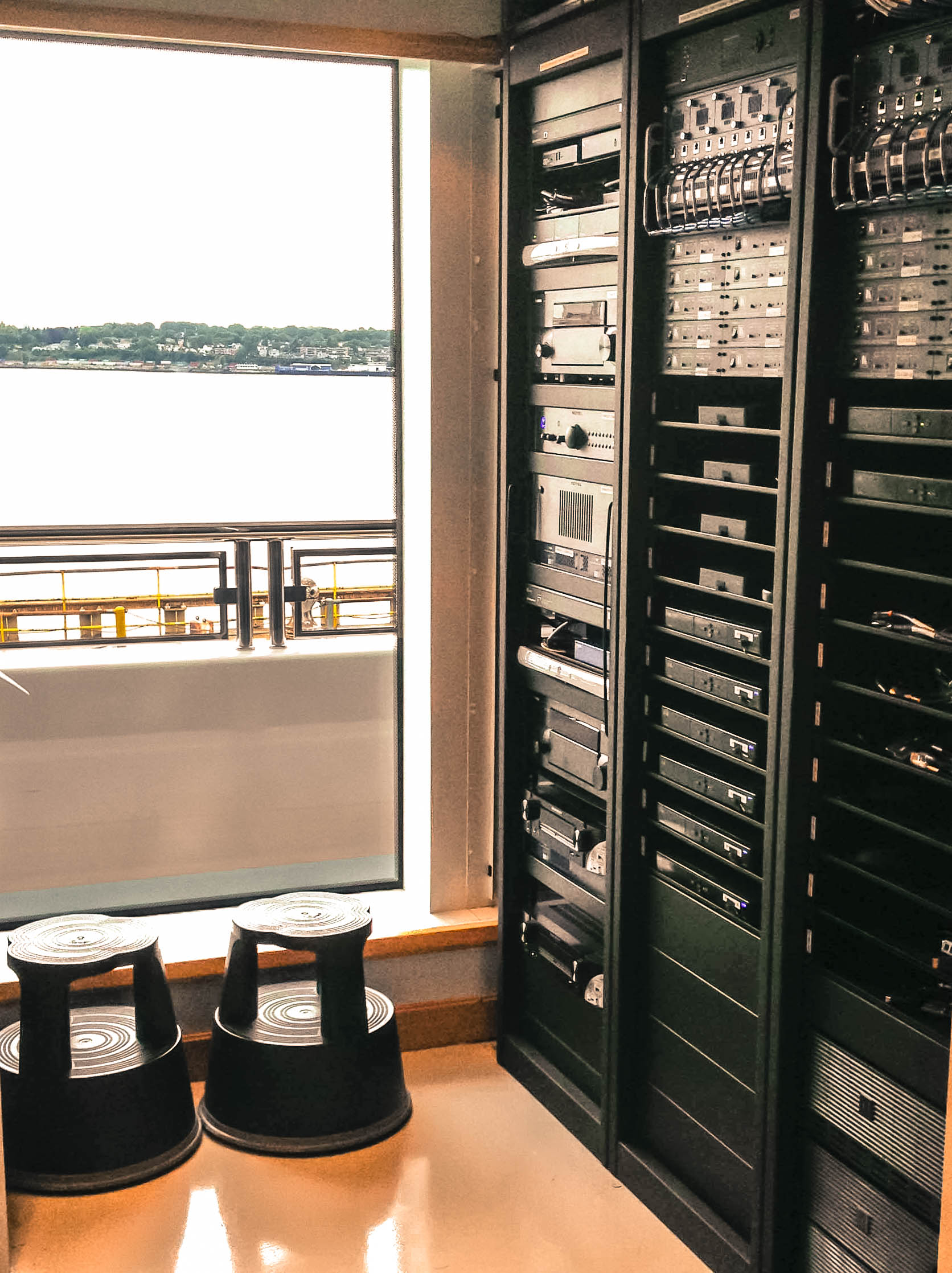
The pace of AI adoption in the superyacht industry has been remarkable over the last eighteen months. Predictive maintenance pilots on flagship vessels. Guest personalization platforms being demonstrated at boat shows. Navigation optimization systems integrating with AIS and weather data. Energy management algorithms running on hybrid propulsion systems. The applications are genuinely impressive, and the industry is moving on them quickly.
But every one of those systems sits on top of something. And most of the conversation around AI in yachting skips straight past it.
The captains and chief engineers being pitched these tools — the people who will actually live with the consequences of adopting them — need a clearer view of what's underneath. Because in practice, the difference between AI that delivers value and AI that becomes another expensive disappointment isn't the algorithm. It's whether the operational foundation beneath it was ready.
This article is for the operators on the receiving end of the AI sales pitch. It's about what those tools actually need to work, why most yachts aren't currently set up to provide it, and how to think about the question of "should we adopt this?" in a way that protects you from the disappointment that comes from saying yes too early.
The layers nobody talks about
When an AI vendor demonstrates predictive maintenance on a generator, what they're showing you is the top of a stack. Beneath it, in order, sits everything that has to be true for the prediction to mean anything:
The AI layer. The algorithms, the models, the dashboards. The visible part of the product.
Sensor and telemetry layer. Real-time data feeds from the equipment — temperatures, pressures, vibrations, run hours, fuel consumption. The AI is reading from this layer.
Operational data layer. The maintenance history of the equipment, the service records, the fault logs, the parts replacements, the operating context. The AI compares current telemetry against this history to identify deviations.
Equipment records layer. The asset register itself — what equipment is onboard, what its specifications are, when it was installed, what version it is, how it's configured. The AI needs to know what it's looking at.
Documentation layer. The manuals, the service bulletins, the manufacturer's expected behavior. The AI needs reference data to compare current behavior against expected behavior.
Each layer has to be complete, current, and trusted before the layer above it produces useful output. A predictive maintenance algorithm with no maintenance history isn't predicting anything — it's pattern-matching against a void. A guest personalization system fed inconsistent guest data isn't personalizing anything — it's generating recommendations from noise. The AI is only as reliable as what's beneath it, and on most yachts, what's beneath it isn't ready.
This is the unglamorous reality the AI sales conversation tends to avoid.
What the foundation actually requires
For each of those underlying layers to support an AI tool effectively, specific conditions have to be met. None of them are technically difficult, but most yachts haven't got them in place.
Equipment records: complete, accurate, and current
Every piece of equipment that AI might monitor or analyze needs to exist in a structured equipment register with accurate identification — make, model, serial number, install date, current configuration, current location. The AI vendor will almost certainly ask for this data during onboarding.
The yachts that can produce a clean equipment register in an afternoon have something to build AI on top of. The yachts whose equipment records are scattered across spreadsheets, refit binders, and the chief engineer's memory have to do that work first, before any AI conversation becomes practical.
Maintenance history: continuous and trustworthy
Predictive maintenance algorithms learn from history. They identify patterns by comparing current behavior to past behavior. The longer and cleaner the history, the better the predictions.
A yacht with five years of clean maintenance history — every service logged, every fault recorded, every parts replacement documented — gives an AI tool something to work with. A yacht with maintenance history scattered across spreadsheets that have changed hands four times gives the AI tool a problem to solve before it can start solving the actual problem.
Run hours and operating context: consistent and accurate
The AI needs to know how the equipment has been used. Run hours, fuel burned, load profiles, operating environments. Without this context, the AI can't tell whether current behavior is normal-for-this-equipment or anomalous.
Most yachts capture some of this data but not all of it, and the data that exists often lives in different places — engine room logs in one system, fuel records in another, weather and operational context in a third. Pulling it together for AI consumption requires either centralizing it first or building expensive data pipelines that connect the disparate sources.
Inventory and parts records: linked and current
If the AI predicts an upcoming failure and recommends a parts order, it needs to know what spares are already onboard. An AI tool that suggests ordering a part that's sitting in the engineering locker isn't adding value; it's adding noise.
This requires inventory linked to equipment — every spare part connected to the specific equipment it supports, with accurate current quantities. Most yachts maintain inventory and equipment as separate systems that don't talk to each other, which makes intelligent recommendations impossible.
Crew and guest records: structured and consistent
Guest personalization AI needs structured data about preferences, dietary requirements, prior experiences, communication patterns. If the data is scattered across email threads, WhatsApp messages, and individual crew members' notebooks, the AI has nothing reliable to learn from.
The same applies to crew records for AI tools that touch crew management — scheduling, training, performance. Without structured records that the AI can read, the tool is generating output from incomplete inputs.
Documentation: indexed and accessible
Many AI tools rely on reference documentation — manufacturer manuals, service bulletins, specifications. If these documents live in folder hierarchies that nobody can navigate, the AI either can't access them or accesses them in a way that's slow and unreliable.
A yacht with documents centralized and linked to the equipment they describe is ready for AI tools that need to reference manuals during analysis. A yacht with PDFs scattered across drives and email isn't.
What "AI sitting on a bad foundation" actually looks like
When AI tools are deployed on yachts where the foundational layers aren't ready, the failure modes are predictable. They're rarely framed as failures — usually they're framed as "early adoption challenges" or "the AI didn't quite match our use case" — but the pattern is consistent.
The AI generates output that the crew doesn't trust. Predictions feel disconnected from operational reality. Recommendations contradict what experienced crew know about the boat. Over time, the crew stops paying attention to the AI's output, and the tool becomes shelfware.
The AI requires extensive manual data entry to function. The vendor's setup process reveals that the data the AI needs doesn't exist in usable form, so the chief engineer ends up spending weeks entering historical maintenance records, equipment specifications, and operational context just to get the tool running. The hidden labor cost of adopting the tool exceeds its benefits for years.
The AI works on some equipment but not others. The systems that happen to have clean data attached produce useful output. The systems with messy or missing data produce confusing output. The crew has to constantly remember which AI predictions to trust, which makes the tool's contribution to operations net-negative.
The AI's value can't be evaluated. Without a clean operational baseline, there's no way to tell whether the AI is actually helping. Did the predicted failure actually happen, or was it a false alarm? Did the recommendation actually save money, or would the same outcome have occurred anyway? The yacht ends up paying for AI it can't measure.
Insurance and warranty implications get murky. When an AI tool's recommendation is followed and something goes wrong, who's responsible? When the AI fails to predict a failure that would have been caught by traditional maintenance, what's the liability picture? These questions are hard enough on a yacht with good operational records. On a yacht without them, they become genuinely difficult.
The vendors selling these tools rarely mention these failure modes during the sales process, partly because they don't fully see them and partly because acknowledging them would slow down adoption. The captains and chief engineers who've been through one or two of these deployments tend to develop a more skeptical view of AI adoption than the industry conversation suggests.
The vessels actually getting value
Some yachts are getting genuine value from AI tools right now. They share a common characteristic: they did the foundational work first, often years before the AI tools became available.
These vessels typically have:
- A complete, accurate equipment register that's been maintained continuously
- Multi-year maintenance history that's structured, searchable, and trustworthy
- Inventory that's linked to equipment and reflects current reality
- Crew and guest records that are centrally organized and consistently captured
- Documentation that's indexed and accessible from operational records
- A culture of capturing operational context as a routine part of doing the work
When an AI tool gets deployed on this kind of foundation, the integration is fast, the output is trustworthy, and the value is measurable from the first month. The AI is doing what it's supposed to do — finding patterns in well-curated data — rather than fighting through data quality problems before it can start working.
These yachts didn't build their foundation with AI in mind. They built it because the operational discipline was valuable in its own right. When AI tools became available, the foundation was already there. The yachts are now reaping a benefit they didn't specifically design for.
This is the most important pattern to notice: the foundation pays for itself in operational benefits regardless of whether AI gets adopted. AI compatibility is a bonus, not the justification.
What this means for operators being pitched AI tools
If you're a captain or chief engineer being approached about adopting an AI tool, the most useful question to ask isn't about the AI itself. It's about your foundation.
Before evaluating any specific AI offering, work through these questions about your vessel:
1. Could we produce a complete equipment register in a day?
If yes — proceed to the next question.
If no — the AI vendor will require you to do this work as part of onboarding. The cost of the AI tool needs to include the labor cost of producing the register, which is significant.
2. Do we have at least 24 months of clean, structured maintenance history?
If yes — predictive maintenance tools have something to learn from.
If no — predictive maintenance tools won't produce reliable output for at least 12-24 months after adoption, while they accumulate the history they need.
3. Is our inventory linked to equipment?
If yes — AI recommendations about parts and supplies can be intelligent.
If no — AI recommendations will frequently suggest things you already have, or fail to account for what you don't.
4. Can we trust our operational records?
If yes — AI can use them as inputs.
If no — AI will produce outputs that reflect the inconsistency of the inputs.
5. Is the documentation accessible from operational records?
If yes — AI tools that reference manuals can integrate cleanly.
If no — AI integration will require document migration as a prerequisite.
6. What happens if we adopt this AI tool and it doesn't deliver?
This question rarely gets asked. The honest answer often involves substantial sunk cost — the labor to set it up, the workflows that got reorganized around it, the operational decisions that depended on its output. Reversibility matters, especially for early-stage tools.
7. Does the foundational improvement we'd have to do anyway deliver value on its own?
This is the framing that protects you. If improving your operational foundation delivers benefits regardless of whether the AI tool succeeds — and it does — then doing the foundational work first is rational independent of the AI decision. You can always layer AI on top of a strong foundation. You can't successfully layer AI on top of a weak one.
What this looks like in practice
The yachts that are best positioned for the AI era aren't the ones that adopted AI early. They're the ones that built strong operational systems and treated AI compatibility as an emergent benefit.
These vessels run on platforms that capture operational data as a side effect of doing the work — maintenance gets logged because the system makes logging easier than not logging, certificates get tracked because the system surfaces them automatically, equipment records stay current because the system requires updates as part of normal workflow. The data accumulates correctly because the system was designed for that.
When an AI tool comes along, integration is straightforward. The data is structured, the history is clean, the records are trustworthy. The AI does what it's supposed to do, and the crew can evaluate whether it's actually helping.
When the AI tool turns out not to deliver value — which happens, especially in the current early phase of yacht-specific AI — the underlying operational discipline remains. The foundation served the vessel well during the AI experiment, and continues to serve it afterward.
This is the position to aim for. It's available right now to any vessel willing to invest in the foundational work, regardless of what AI tools are on the horizon.
A note on where YMS360 fits
YMS360 was built to be exactly this kind of foundation. The platform captures operational data in structured, consistent, queryable form — equipment registers, maintenance histories, inventory linkages, certifications, documents, crew records, running logs. It's the operational backbone that makes AI tools effective when they get adopted, and it's valuable independent of whether they ever do.
We're paying close attention to the AI conversation in yachting, and we're building toward a future where the layer above the foundation includes intelligent capabilities that genuinely help operators. That work is ongoing rather than complete, and we're being deliberate about it — better to deliver something real later than to ship something half-formed early. In the meantime, the operational foundation YMS360 provides is what AI from any vendor will need to sit on top of.
The team has been building yacht software since 1999. We've watched the industry move through several technology cycles, and we've learned that the durable advantage is in the layer most people don't talk about — the structured, complete, trustworthy operational data that makes everything above it possible.
If you're being pitched AI tools right now and want to evaluate them with a clearer view of what they need to work, we'd be glad to help you assess your foundation. The right time to do that work is before the AI adoption decision, not after.
The vessels that will get the most from AI in the next five years are the ones whose foundations are ready now. The technology will change. The principle won't.