.jpg)
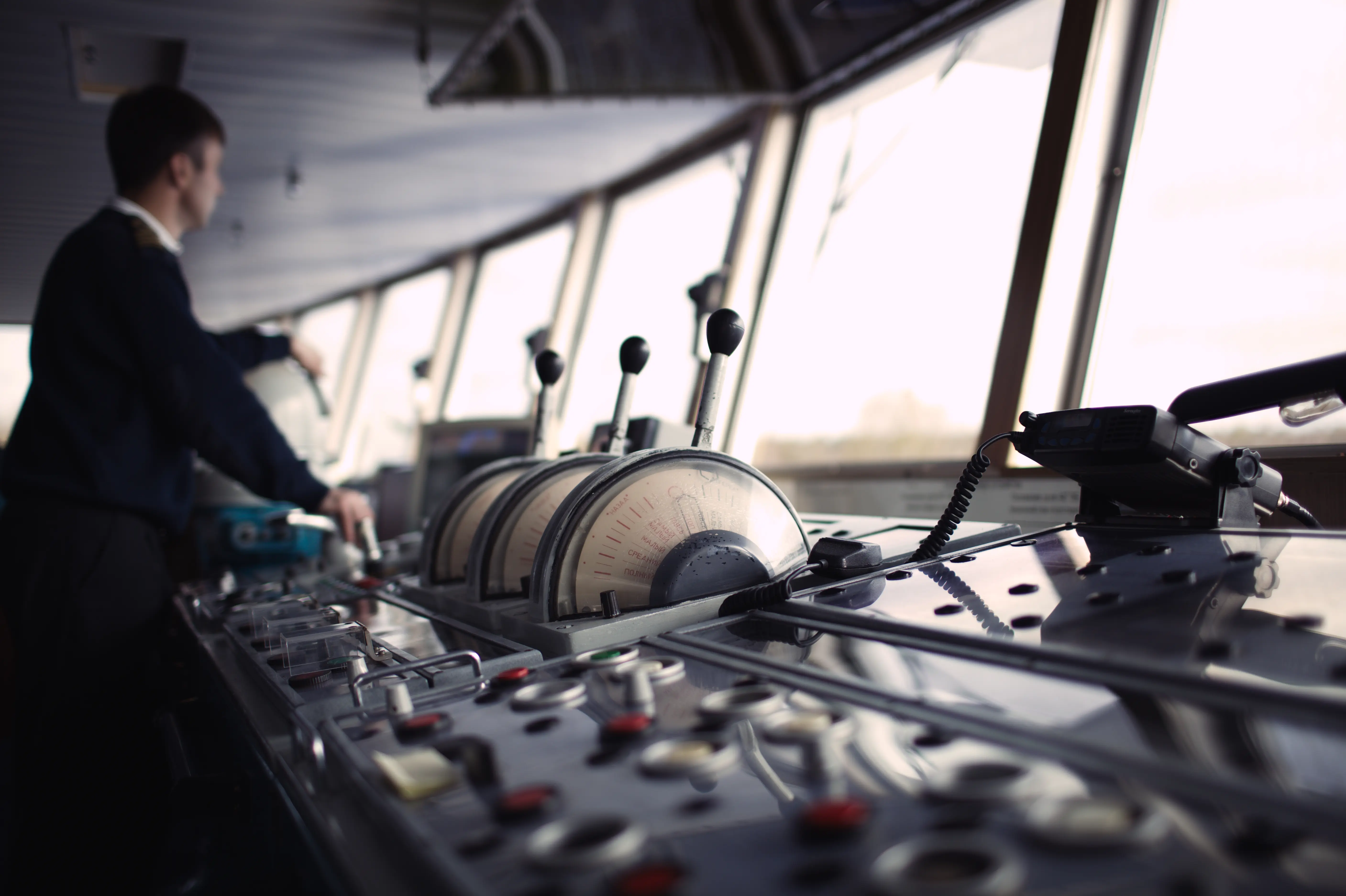
A 65-meter motor yacht arrives in St. Barths the morning of New Year's Eve. The owner has flown in from London with eight guests for a week aboard. By 2pm, the air conditioning system in the master suite has failed. By 5pm, the chief engineer has confirmed that the part required for repair isn't onboard, isn't in the local chandlery, and won't arrive from Miami before January 3rd at the earliest.
The guests sleep in the upper deck staterooms. The owner is frustrated but understanding. Nobody loses their job. The trip continues, mostly fine.
But factor in the cost: the airfreight from Miami at holiday rates, the contractor flown out from Antigua to install it, the discount the captain offered against next year's charter, the wine sent to the guests as an apology. Add the soft costs — the chief engineer's reputation with the management company, the captain's stress level for the rest of the trip, the residual concern the owner now carries about whether the boat is being looked after properly.
That single failure cost something between $15,000 and $40,000 in direct expenses. The damage to the relationship between owner and crew is harder to price.
This article is about that calculation. About what unplanned downtime actually costs on a superyacht — and why the math almost always favors investing in proactive planned maintenance before failures happen, not after.
The categories of cost
Equipment failures on superyachts cost money in ways that are often invisible until they happen. They fall into five rough categories.
1. Direct repair costs
The obvious one. Parts, labor, shipping. These vary enormously depending on what failed and where the boat is.
A generator that fails in Genoa during a refit can be repaired with parts from a chandlery and a local technician — annoying but contained. The same generator failing in the British Virgin Islands during charter season requires emergency airfreight, expedited customs clearance, and a contractor flown out at premium rates.
The same fault, the same part, but the cost varies by an order of magnitude depending on timing and location. Proactive maintenance happens in port, on schedule, when parts are cheap and contractors are available. Reactive repair happens wherever the boat happens to be when something breaks.
2. Lost charter revenue
For commercially operated yachts, this is often the largest line item. A canceled charter week on a 50-meter yacht represents anywhere from $200,000 to $700,000 in lost revenue, depending on size, season, and location. Even a partial cancellation — guests cutting the trip short by two days because of a malfunction — can represent $50,000 to $200,000 in pro-rated refunds.
And it's not just the immediate revenue. Charter clients talk to each other. A guest who has a bad experience because of equipment failure tells their friends, their broker, their family office. The next charter doesn't happen on this boat. Or the next three.
The cost of losing a returning charter client to equipment-related dissatisfaction can be measured in hundreds of thousands of dollars in foregone future bookings.
3. Owner trip disruption
For private yachts, the cost of unplanned downtime isn't measured in lost revenue but in the strained relationship between owner and crew. A failed AC system during a guest visit, a broken stabilizer during a passage in confused seas, a satellite communications outage when the owner is trying to take a call — none of these have a direct dollar cost, but all of them erode trust.
When trust erodes, the consequences show up in different places. A more aggressive refit budget the following year. A captain replaced sooner than they would have been otherwise. A management company change. None of these are framed as "because of that one breakdown," but the breakdown is often part of why.
4. Consequential damage
Some failures cascade. A failed bilge pump combined with a small leak that nobody noticed produces flooding. A failed fuel transfer system overfills a tank and the boat takes a polluting fuel spill that becomes a regulatory event. A failed AC system in the engine room raises ambient temperature enough that other equipment starts shutting down on thermal protection.
The original failure might have cost $5,000 to fix. The consequential damage often costs $50,000 to $500,000.
The yachts that experience this most often are the ones running reactive rather than planned maintenance — the ones where the systems aren't being watched closely enough to catch early signs of trouble before they cascade.
5. Compliance and insurance consequences
Equipment failures sometimes trigger compliance events. A fire detection system found out of service during an audit can result in a non-conformity that affects the Safety Management Certificate. A life raft past its service date discovered during a Port State control inspection can result in detention.
Insurance is where this gets expensive. Underwriters increasingly want evidence of proactive maintenance programs when setting premiums. A claim history that includes failures attributable to neglected maintenance can result in higher premiums or coverage exclusions. A loss event where the underwriter can argue that maintenance was deficient can result in coverage being denied entirely.
The cost here is hard to predict but potentially catastrophic. A $2 million claim that gets denied because of evidence the maintenance program wasn't being followed is the kind of event that can sink a charter operation.
The math nobody runs
Here's the conversation that doesn't happen often enough on superyachts.
The chief engineer would like budget approval for a proper planned maintenance system — software, training, the time to set it up correctly. The cost is real but bounded: somewhere in the range of $10,000 to $30,000 per year all-in, depending on platform and complexity.
The captain or management company evaluates this against the alternative — keeping the spreadsheet, doing what's been done. The alternative looks free.
It isn't free. It's just paid for in different categories that don't show up on the same line item.
A single avoided failure during charter season can pay for the platform for five years. A single avoided ISM audit non-conformity that would have led to corrective action and re-inspection costs more than the platform costs annually. A single insurance claim that doesn't get challenged because the maintenance records are clean and complete justifies the cost forever.
Run the numbers honestly and the answer is rarely close. The cost of investing in proper maintenance management is small. The cost of not doing it is large but uncertain — which is why it gets discounted in the decision, even though the expected value strongly favors the investment.
What "proactive" actually means
Proactive maintenance isn't just "doing the same maintenance, but earlier." It's a different operating model.
The reactive model is built around responding to problems: something breaks, you fix it. Maintenance happens when there's evidence it's needed. The advantage is that you don't do work that wasn't strictly necessary. The disadvantage is that the evidence often appears as a failure, and failures on superyachts cost what failures on superyachts cost.
The proactive model is built around preventing problems. Maintenance happens on schedule, based on manufacturer intervals or condition monitoring, before failure occurs. The advantage is dramatically lower failure rates and lower costs over time. The disadvantage is that you're doing work whose immediate value isn't visible — the engine that didn't fail this season looks identical to the engine that wasn't going to fail anyway.
The challenge of the proactive model is that its successes are invisible. Nobody celebrates the charter that went perfectly because the AC didn't fail. The crew who runs a tight maintenance program doesn't get credit for the failures that didn't happen — they only get blamed for the ones that did.
That's part of why it's hard to justify investment in this discipline. The benefits are real but counterfactual. You're spending money to prevent things you can't prove would have happened.
The yachts that consistently operate at the highest standard understand this trade-off and accept it. They invest in maintenance not because each individual investment is provably valuable in isolation, but because the cumulative pattern of doing the right thing on schedule produces a fundamentally different operating profile over time.
What changes when you switch
Yachts that move from reactive to proactive maintenance tend to see the same set of changes.
Failure rates drop. Not to zero — equipment still fails sometimes — but the catastrophic failures during charter or owner trips become rare. Most failures get caught during scheduled inspections, when there's time to address them properly.
Repair costs drop. Maintenance done in port with parts ordered in advance costs a fraction of emergency repair done at sea or in remote locations.
Insurance becomes easier. Underwriters reward evidence of disciplined maintenance with better terms. Claims that do happen are handled more cleanly because the documentation is in order.
Audits become routine instead of stressful. The auditor's questions have answers. The records are produced in minutes.
Crew satisfaction improves. Engineers who work in a system that supports them — where tasks are clear, history is accessible, and expectations are realistic — burn out less and stay longer. The cost of crew turnover (recruiting, training, the transition period when institutional knowledge is being rebuilt) is itself substantial, and reducing it is a real benefit.
Owner satisfaction improves. The boat works when it's supposed to work. The trips happen smoothly. The stories told around the dinner table are about the destinations and the experience, not about the satellite outage or the broken thruster.
None of this happens overnight. The transition from reactive to proactive maintenance takes a season or two to fully mature. But the effects compound, and yachts that make the shift typically don't go back.
The investment that pays for itself
The point of this article isn't that maintenance costs money. Everyone knows maintenance costs money.
The point is that not maintaining costs more — usually much more — and the costs show up in places that don't get directly attributed to the lack of maintenance. Lost charter clients. Strained owner relationships. Insurance complications. Crew turnover. Compliance findings.
A purpose-built planned maintenance platform is the operational infrastructure that makes proactive maintenance routine instead of heroic. It's how you stop relying on the chief engineer's memory and start relying on a system that doesn't forget.
YMS360 was built specifically for this — to make the disciplined maintenance program achievable without the heroics. If you're spending more on equipment failures than you're comfortable with, or if you've been arguing for years that the boat needs better systems, we'd be glad to show you what proactive operation actually looks like.
The math, in our experience, is rarely close.